Four graduate students have been awarded Universities Research Association (URA) Visiting Scholar awards to fund research activities at Fermilab.
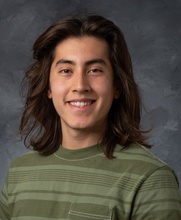
Dylan Blend was awarded funds to continue work on the CMS Outer Tracker. In preparation for the High Luminosity LHC (HL-LHC), CMS will replace its entire tracker during Long Shutdown 3 (LS3). The upgraded system will feature two module types, 2S and PS, designed to enhance performance and extend tracking coverage in |·| from 2.5 to 4.0. A key objective is to provide tracking information directly to the Level-1 (L1) trigger, enabling more efficient event selection. Each module, composed of two stacked sensors, will locally measure the bend of charged particles in the CMS magnetic field, providing the precision needed to meet the HL-LHC’s high-luminosity environment.
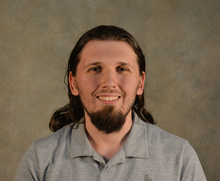
Ohannes Kamer Koseyan was awarded funds to work at the LHC Physics Center (LPC). His research at the LPC would consist of several components which will advance both the Compact Muon Solenoid (CMS) detector and its physics program. On the detector side, he will contribute to the design and construction of the Endcap Timing Layer (ETL) through the automation of construction and quality control of silicon sensor/LGAD modules. In the physics program, he will work closely with the Higgs to Dimuon analysis group to search for the decay of a Higgs boson into a dimuon pair using the data which will be recorded by the CMS detector during Run 3 of the LHC proton-proton collisions. The proposed activity is centered at Fermilab’s LPC and SiDet and includes analysis work as well as detector development work.
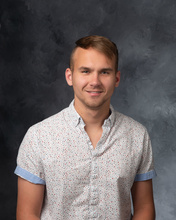
Zane Ozzello was awarded funds for a long-term stay at Fermilab in Spring 2026 from March to May to continue a collaborative effort with Fermilab scientist, Dr. Stephen Mrenna, on the development of a hybrid quantum/classical event generator for hadronization (QuPYTH). This work began under URA support for Kenneth Heitritter, now working for qBraid, with Dr. Mrenna. This work already showed that a spin-1 mapping to Rydberg ladders can be used in place of the Lund string model in Pythia for hadronization. The team will improve upon this by working directly with the spin-1 system, the compact Abelian-Higgs model. They plan to use density matrix renormalization group methods under time evolution with time-evolving block decimation to increase the scale of our ab-initio fragmentation stand-in, by increasing our site totals to the hundreds, permitting better simulation for the fragmentation replacement.
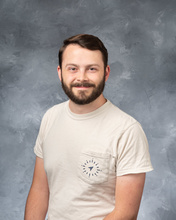
Blake Senseman was awarded funds to continue a collaborative effort with Fermilab scientist, Dr. Stephen Mrenna, on the development of a hybrid quantum/classical event generator for hadronization (QuPyth). This work began under URA support for Kenneth Heitritter, now working for qBraid, with Dr. Mrenna. This work already showed that a spin-1 mapping to Rydberg ladders can demonstrate some features of string breaking and generate hadron multiplicities for use in Pythia. They propose to extend this work into calculating fragmentation functions and their dependence on model parameters, as well as identifying entanglement-related signatures of confinement in these systems. This will involve simulation using Rydberg atom devices and tensor network numerical methods.
Dylan Blend and Ohannes Kamer Koseyan are both a part of Dr. Yasar Onel’s research group. Zane Ozzello and Blake Senseman are part of Dr. Yannick Meurice’s research group.