Assistant Professor David Nataf has recently received several research grants that could improve our understanding of planets outside the solar system.
Nataf received $25,000 in July 2025 and $55,311in November 2024 from the Space Telescope Science Institute (STScI) for “Correcting for the Effects of the Optical/Near-Infrared Interstellar Extinction Toward the Roman Galactic Exoplanet Survey Fields.” This project will be an investigation the wavelength-dependence of interstellar extinction toward the inner Galaxy using near-infrared observations from the Hubble Space Telescope, particularly those involving observations through wavelength windows that are not accessible from the ground.
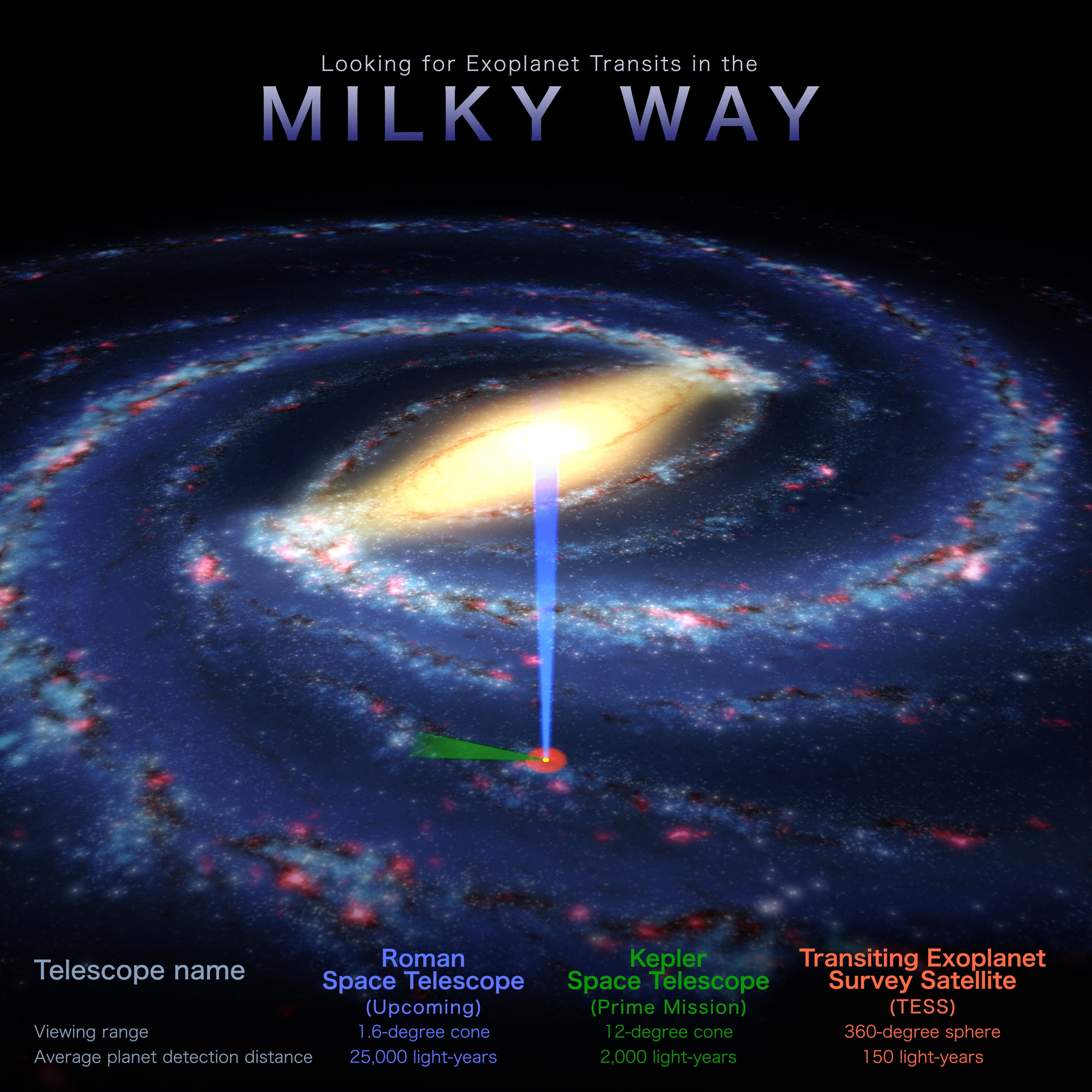
The upcoming Roman Galactic Exoplanet Survey is expected to dramatically improve our understanding of planets outside our solar system. It could discover up to 200,000 new planets, including small ones like Mars, even if they are far from their stars.
To make sense of these discoveries, scientists need to know more about the stars these planets orbit. However, these stars are in a dusty part of the Milky Way, which makes it hard to see them clearly. The dust not only blocks a lot of light, but it also affects different colors of light in unpredictable ways.
To solve this, researchers are asking for time on the Hubble Space Telescope to study how this dust behaves in 14 specific areas. They will use special filters that can detect light wavelengths that can’t be seen from Earth, along with some standard filters, to get a clearer picture. This will help them create a 3D map of the dust and better understand the stars and planets hidden behind it.
Nataf is also the principal investigator for “A Three-dimensional Extinction Map for Microlensing Planet Discovery and Characterization.” This $310,987 grant from NASA was transferred to the University of Iowa from Johns Hopkins University, Nataf’s previous institution.
This project also involves the Roman Galactic Bulge Exoplanet Survey, in combination with ground-based microlensing efforts like KMTNet and OGLE, to expand our understanding of exoplanets. It will detect 1,400 planets via microlensing and 150,000 transiting planets, around stars that are more metal-rich and diverse than those in the Kepler field.
One challenge is that this part of the galaxy is hidden behind thick clouds of dust, which block and distort starlight. To fix this, Nataf’s team will:
- Create the most accurate dust maps of the inner galaxy.
- Use data from over 13,000 stars to fine-tune those maps.
- Combine all this with new distance and brightness data to build a full 3D picture of the stars and dust.
This work will help scientists better understand how planets form and why they come in so many diverse types—one of the biggest questions in astronomy today.