Why Iowa?

Home of James Van Allen, the “Father of Space Science" and one of the Top Fifth Global Universities in Physics according to U.S. News and World Report.
Build a foundation

Expand your horizons

Learn from experts

See yourself here

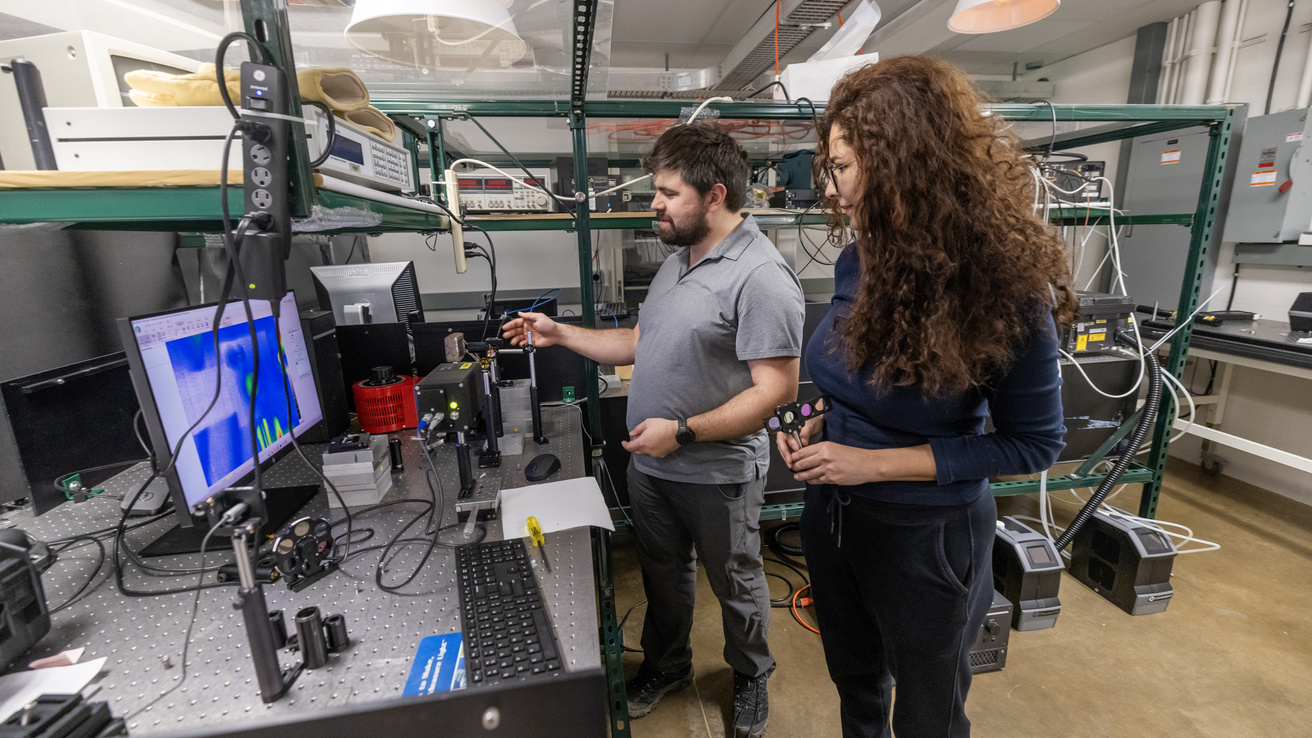
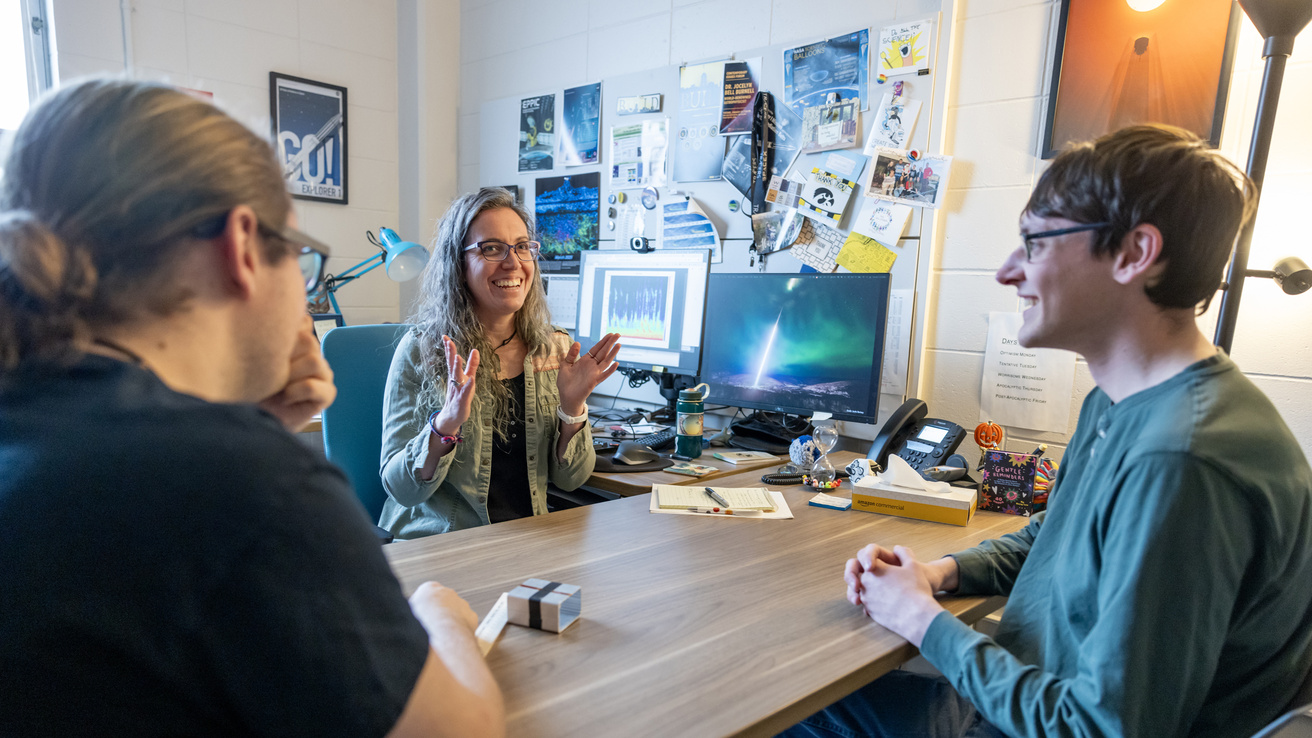
Whether you're interested in space and plasma physics, astronomy and astrophysics, condensed matter and optics, or nuclear and particle physics, Iowa will develop your analytical, computational, and experimental skills to advance scientific knowledge of the universe around us.

Research

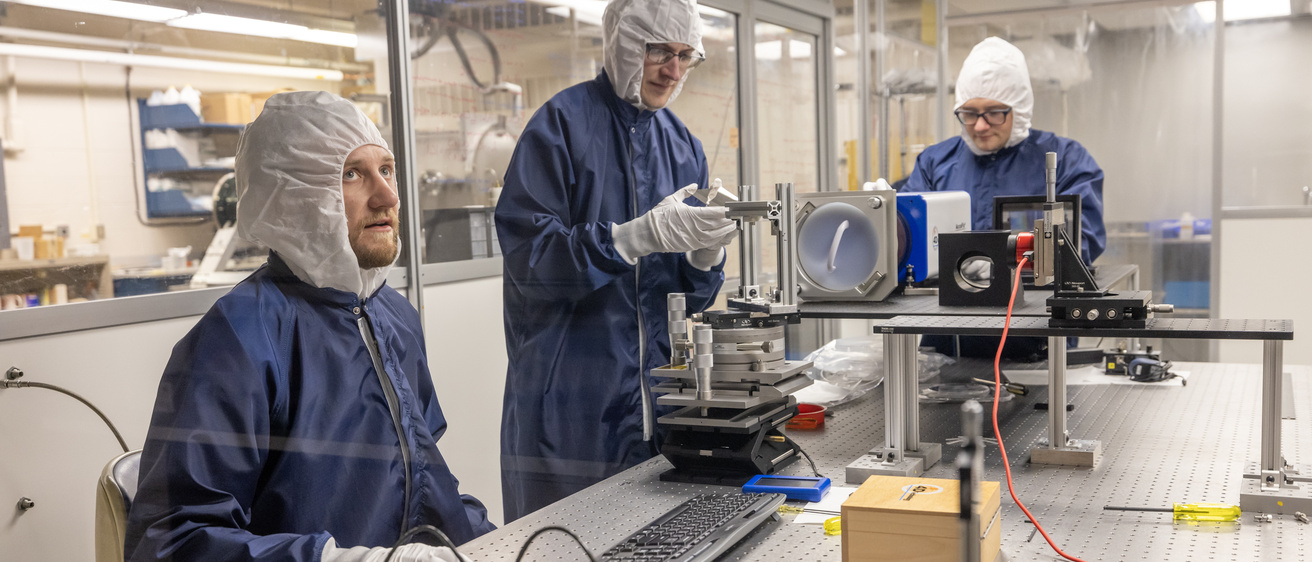
Whether you’re passionate about space physics, quantum mechanics, or the intersections of physics and engineering, you’ll collaborate with expert faculty and cutting-edge labs. You’ll have access to hands-on research experiences, from working on space missions to contributing to particle physics discoveries. These opportunities allow you to expand your knowledge while making tangible contributions to the scientific community.

Top Fifth

of Global Universities in Physics

U.S. News and World Report 2022

$ 26 m

In annual research expenditures

Averaged over FY18-22

Write your story

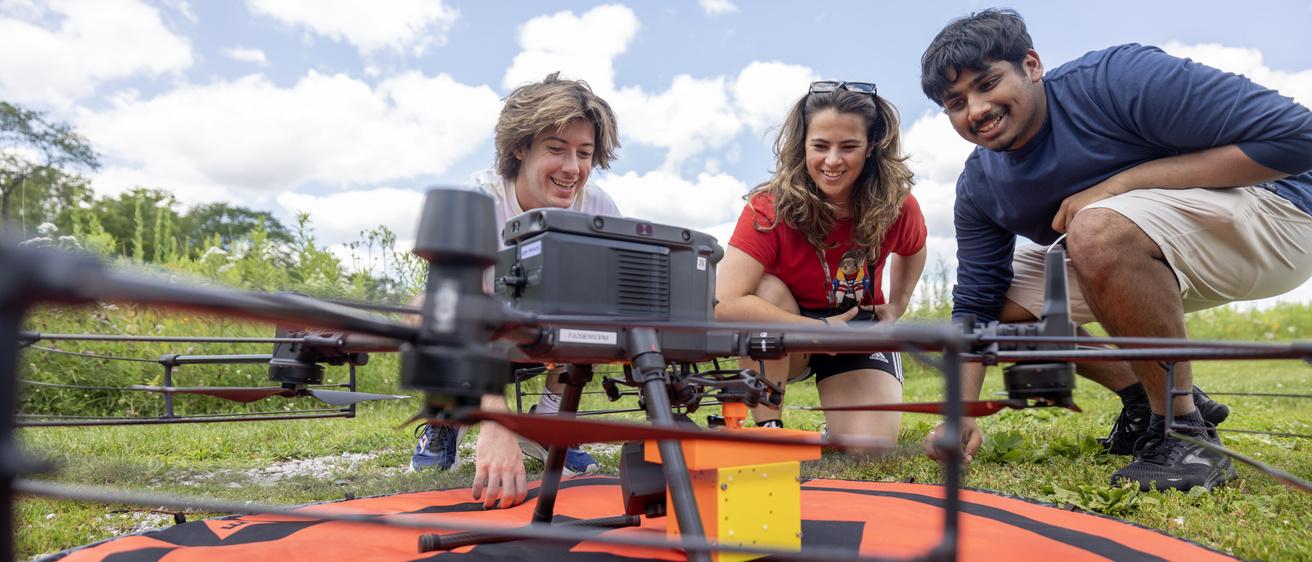
Build on the legacy of space pioneer Dr. James Van Allen by getting involved with our faculty’s cutting-edge space physics research with NASA and the NSF, even as an undergrad.

students in reserach lab

24

Full-time Faculty
Physics and Astronomy reserach lab

Very High

Research 1: Doctoral Universities
Research Activity

Carnegie Classification

120 +

Undergraduate physics and astronomy majors

2023-24 data

Physics and Astronomy reserach lab

70 +

Graduate students

2023-24 data

student with faculty discussions

Explore physics at Iowa

James Van Allen

Engage in our rich history by learning about the "Father of Space Science"

Outreach and engagement

Outreach and public engagement are essential to sharing our research with the general public, by interacting and listening in order to generate mutual benefit.

Earn your Natural Sciences requirement

Learn more about how our programs can satisfy the General Education CLAS Core requirement in Natural Sciences.

News and announcements

Physics and Astronomy faculty look ahead to next phase of lunar exploration after Artemis II

Tuesday, April 14, 2026
Following the success of Artemis II, Allison Jaynes and Casey DeRoo of the Department of Physics and Astronomy in the College of Liberal Arts and Sciences are contributing to the next phase of lunar exploration through instrument development and space environment research. Their advancing work could support future missions, including new approaches to studying space and conducting astronomy from the moon.

Experiments Ring the ‘Death Knell’ for Sterile Neutrinos

Thursday, April 9, 2026
Decades of weird experimental results appeared to support the existence of the sterile neutrino, a hypothetical particle that would solve multiple mysteries. But recent experiments have killed hope of finding these phantoms, leaving physicists to wonder what might explain their anomalies. “It’s on us to learn how to get creative,” said Matheus Hostert, a physicist at the University of Iowa. “This is a very exciting time for the field, especially for theorists like myself who get to ask hard questions about all this data.”

Physics and Astronomy researchers aid rocket launch in Norway

Monday, April 6, 2026
David Miles, deputy director of research operations in the Department of Physics and Astronomy and a co-investigator for the rocket launch, was tasked with building the magnetometer attached to the rocket. While Miles had seen countless rocket launches before, Norway’s launch was a first for graduate student Jessica Mondoskin, the lead graduate student for the magnetometer project.

Events

Mathematics Colloquium - Gabor Szekelyhidi; Northwestern University

Thursday, April 30, 2026 3:30pm
MacLean Hall

Title: Singularities of generic mean curvature flows

Abstract: Surfaces evolving by mean curvature flow in R3 can develop rather complicated singularities. However, it was conjectured by Huisken that generically only very simple singularities can form. This conjecture was recently resolved by works of Chodosh-Choi-Mantoulidis-Schulze and Bamler-Kleiner. I will discuss these results, as well as what more we can say.

Professor Szekelyhidi is given a special lecture on some of the introductory...

Public Observing Night - Van Allen Observatory promotional image

Public Observing Night - Van Allen Observatory

Friday, May 1, 2026 8:00pm to 10:00pm
Van Allen Hall

Please join the University of Iowa Physics and Astronomy department as we use the Van Allen Observatory and small telescopes to tour the spring sky. To attend this Astronomy observation session, follow the signs in Van Allen Hall to the east elevator to reach the roof.

A History of the Telescope - presented by Gavin Frueh & Jacob Payne; Graduate Students; Department of Physics and Astronomy promotional image

A History of the Telescope - presented by Gavin Frueh & Jacob Payne; Graduate Students; Department of Physics and Astronomy

Friday, May 15, 2026 7:30pm to 8:00pm
Van Allen Hall

Please join us for the Astronomy Public Talk series, where we host short, accessible talks on a wide range of astronomy and physics-related topics—free and open to the public! This event will feature a presentation by UI Physics and Astronomy graduate students Gavin Frueh and Jacob Payne, who will share a brief history of the telescope. A public observing session at the Van Allen Observatory will immediately follow this talk, weather permitting.

View more events